



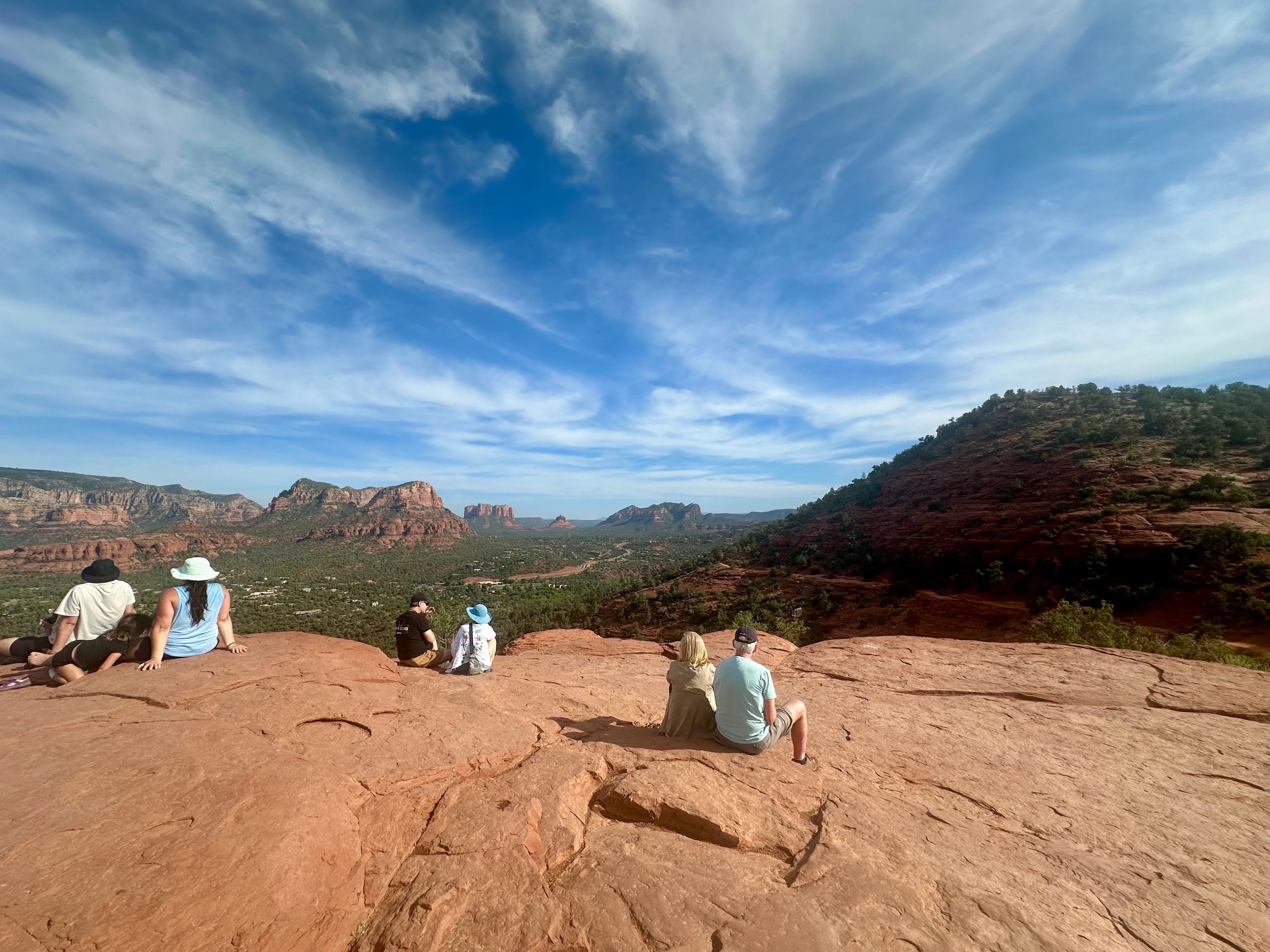
We (Jordan and Johnnie) have been exploring ‘what is possible’ for Unhurried Design and in our work together. We’ve landed on some ideas we’d like to share with you.
Unhurried Practice Group
We’re developing an Unhurried Practice Group, which is for people who want to bring greater presence to their work - as leaders, designers, partners, parents, or friends. We believe the modern world often steals our attention and leaves us feeling fragmented, chasing short term goals and rewards, tempted by the next fragment of dopamine.
We are wondering: What if we learned to support each other in a way that creates an abundance, rather than a scarcity, of attention? Can we grow our ability to maintain a grounded presence, so that we experience a greater sense of aliveness and engagement with life around us? You can learn more here and register interest for the practice group by responding to this email.
Unhurried Design projects
With Unhurried Design, we’re now focusing on consulting with people who want to lead projects on challenges/opportunities they might be facing in their organizations and communities.
Across our combined 40+ years of experience, we have helped engineers, physicians, executives, teachers, and other practitioners unhurriedly design products, processes, and services. In addition to what’s actually created, we will seek to support you in developing a non-anxious presence for yourself, too, so you can share it with others, which we believe can have a powerful effect in creating a calm company where things don’t have to be crazy at work.
If you’d like to explore starting a project with us, we would like to get to know you and the challenge you are facing, and allow that to surface what’s needed, as opposed to bringing you a fixed framework or plug-and-play solution. If this sounds interesting, let’s talk about the challenge/opportunity that’s on your mind.
Unhurried Design - a definition and principles
Here’s a summary of how we think of Unhurried Design.
Definition
Unhurried Design. A life-centered alternative to design thinking that prioritizes relationships and reflection, going the right pace at the right time, to yield resilient solutions with less material waste.
Principles
Practice, practice. Design theory has its use, but we’re actually more interested in the practice: the experimenting, playing, and exploring that creates connections and lets something useful emerge. So we share stories, practice being half-a-shade braver, play with doubt and uncertainty and take the risk of sharing more of our feelings.
Context matters. We want design to contribute to a sustainable future. We embrace nature: we design in nature, noticing its patterns and rhythms. Allowing its biodiversity and vitality to enhance our experience. Taking into account context also includes designing alongside our local communities.
The body is intelligent. We move: we do work that involves our bodies, helps us notice our feelings and sensations as we do. In a society that prizes head-heaviness, we recognize that our bodies house most of our intelligence and are our greatest storytelling tool.
Leveling the playing field. Too often, design feels like it’s an expert skill for the select few, who then take on a role of designing for, rather than with, others. We believe everyone is creative and can be involved in the process of design, with an emphasis on those belonging to traditionally subordinated groups.
More than a process. We want to see humans design with greater calmness and presence, and find more meaning and relationship in their work. We invite people to tend their interior condition when designing, which we believe has an outsized effect on what’s created.
Avoiding the rush. Design often feels driven by anxiety. Often people and organizations rush the design process. A conventional approach to design incentivizes speed and efficiency as the pathway to success but these can end up leading to messier, less effective products and processes. We end up circling back to fix what was missed or ignored due to the pressures and demands of an urgent culture and race to be first, which burns people out along the way.
Thanks for reading, fellow traveler. Until next time.
J&J