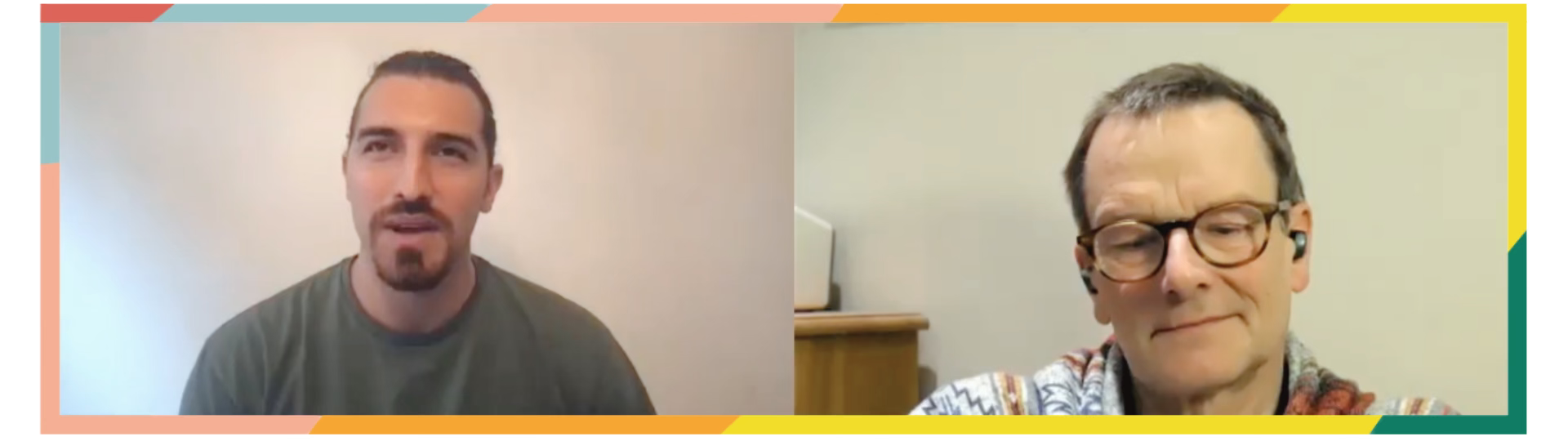
The other day my friend Johnnie Moore and I were writing some copy in a Google Doc for our new Unhurried Design course Designing with Presence that we are building.
Across the screen he was whipping up words in a flurry.
I hardly typed a sentence before he had two full paragraphs.
Johnnie chimed in, “You can type, too, bruh!” in his cheeky attempt at an American accent.
“I’m…thinking!” I groused.
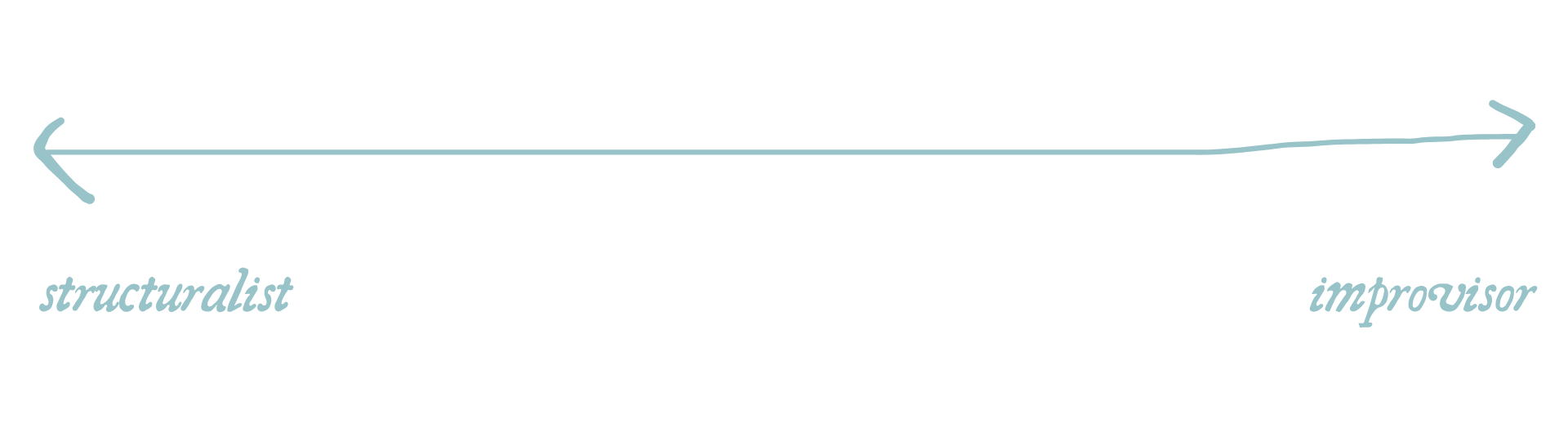
This presented me with an opportunity to notice how I was approaching our conversation: as a structuralist, or an improvisor.
It’s helpful to realize I am never entirely one or the other. Same goes for you.
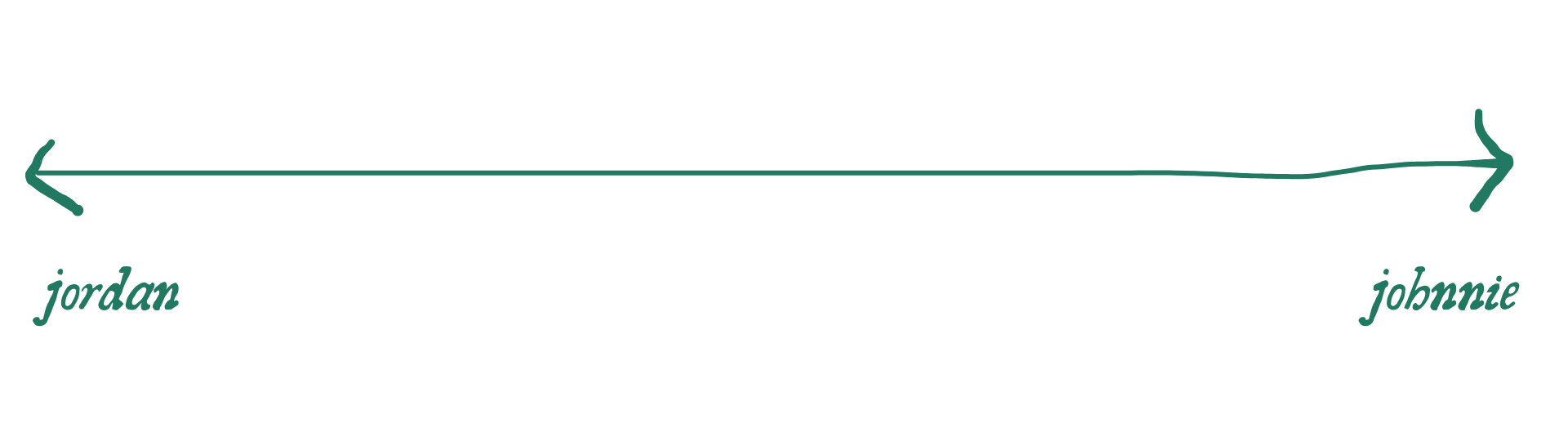
Taking this example, I invite you to imagine the roles of structuralist and improvisor existing on a continuum.
Sometimes, like Johnnie on our call, rehearsing what you have to say on camera or live in front of others is where your genius will shine.
At other times, like me in this particular conversation, privately writing things down and tinkering and cutting and adding then slicing again is how you’ll get a better sense of what you are trying to say once in front of people.
There’s no right or wrong.
Except when…
You “rigidize” and don’t practice opposite.
When we rigidize we resort to what we know, preferring self at the expense of others, or sometimes others at the expense of self.
We end up locked into a binary instead of exploring the possibilities that exist along a continuum, like that of self and other.
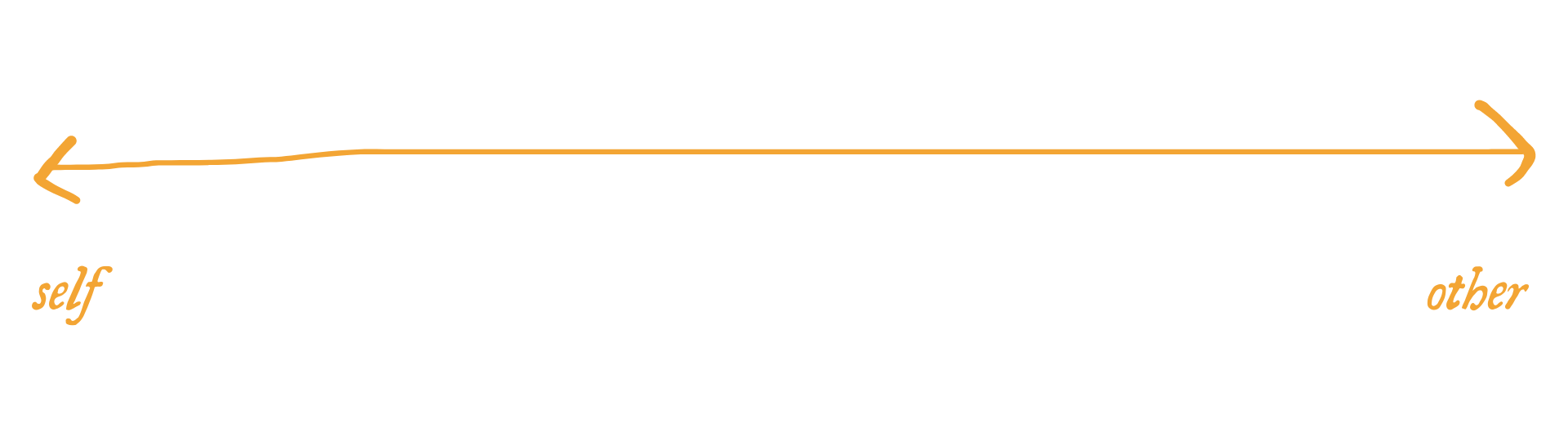
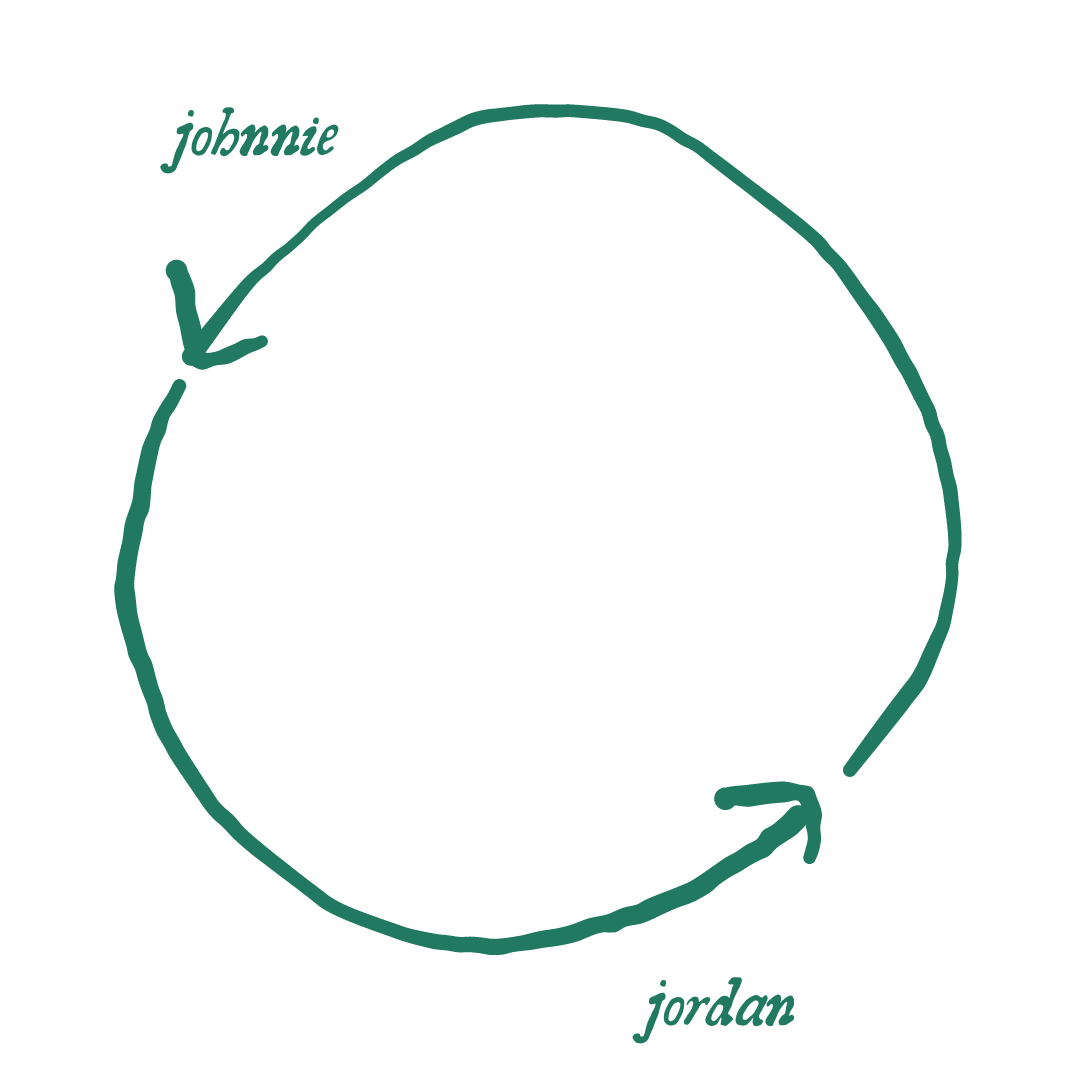
Or perhaps, instead of an either/or, a more helpful way of imagining this dynamic is with self as part of the larger organism of humanity (to evoke the philosopher Henri Bergson). Not an individual self that is disconnected from others (as we often believe and live out in the West) but inextricably bound up and inseparable from relationship with others. A both/and, if you will.
We might, then, more effectively imagine ‘self’ and ‘other’ as tethered on a circle.
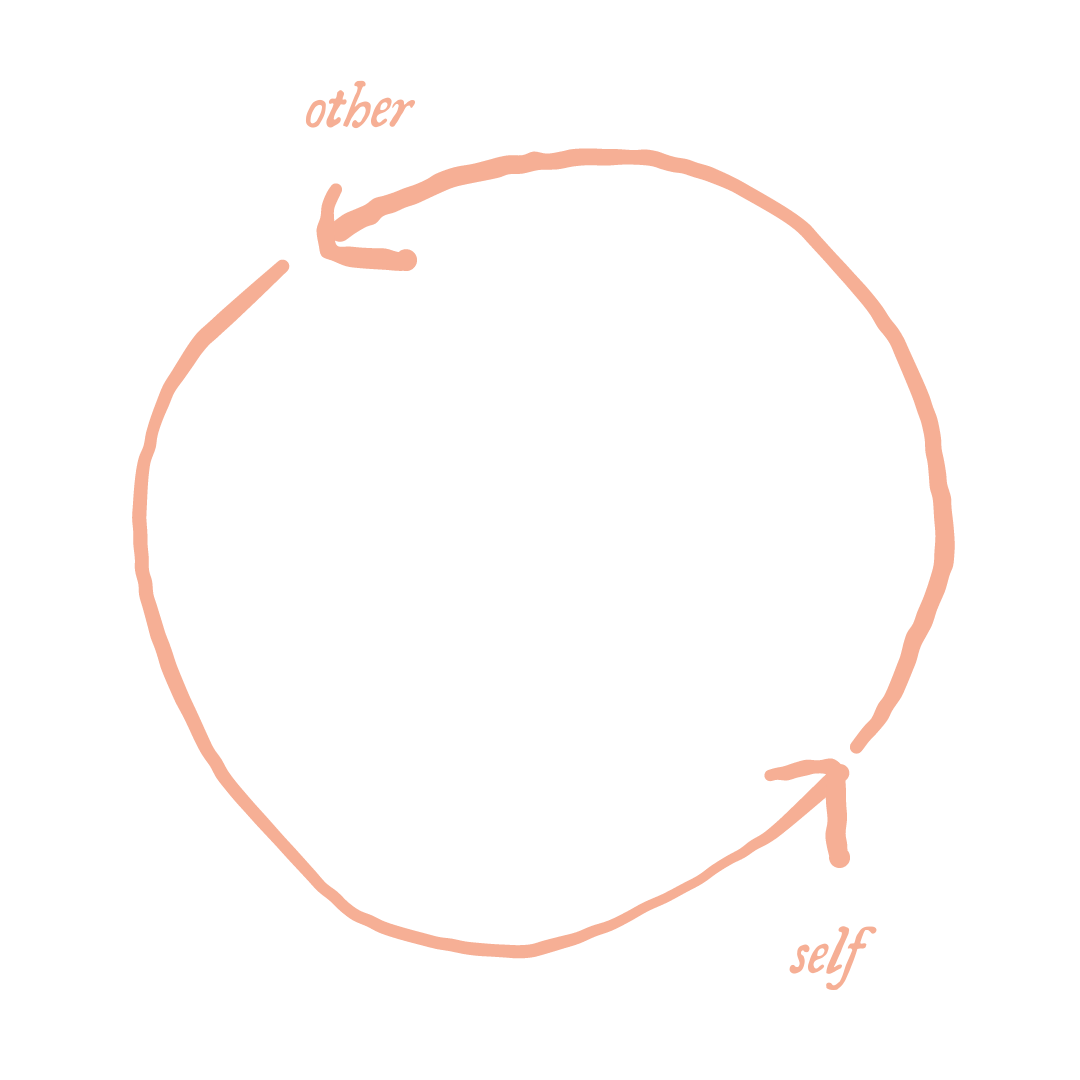
Regardless of how you diagram it, in life you and I will be presented with a range of either/or’s in which we can easily revert to our most rehearsed or preferred binary (self/other, structure/improvisation, conservative/liberal, Real Madrid/Manchester City…you get the idea).
What if, in response, we began to practice in the direction that feels most opposite, without neglecting our own desires along the way?
Back to Johnnie and me.
Sometimes we seem to take opposite positions.
The challenge is to do this playfully, not becoming rigid, while being interested in the tensions between.
This is not just about empathy (looking out).
To work well together it can be helpful to do the work of noticing what we each want and need (looking in).
This does not mean we always end up “meeting in the middle” either.
Sometimes what is found in the middle is a failure.
Meeting there can rob each person of their magic and spunk.
That is why Johnnie and I also make the attempt to create space for ourselves and give each other permission to practice what feels most natural.
Sometimes a simple conversation and shared understanding about what lies in-between can keep us from overcorrecting.
One practical example of how we might practice opposite shows up when we facilitate workshops.
Johnnie might take the lead in one session, and I a backseat.
We might flip it for the next session.
Or run two sessions in a row where one of us leads depending on what we noticed with the participants in the previous session.
While doing this well requires that we set aside time for reflection, it allows us to benefit from our strengths, play with the roles of structuralist and improvisor, keep learning, and co-create the most inspired experience we can for participants.
If we don’t keep tending the quality of our attention though, what emerges might end up as less than the sum of its parts. And we might feel less energized.
So we try to practice opposite.